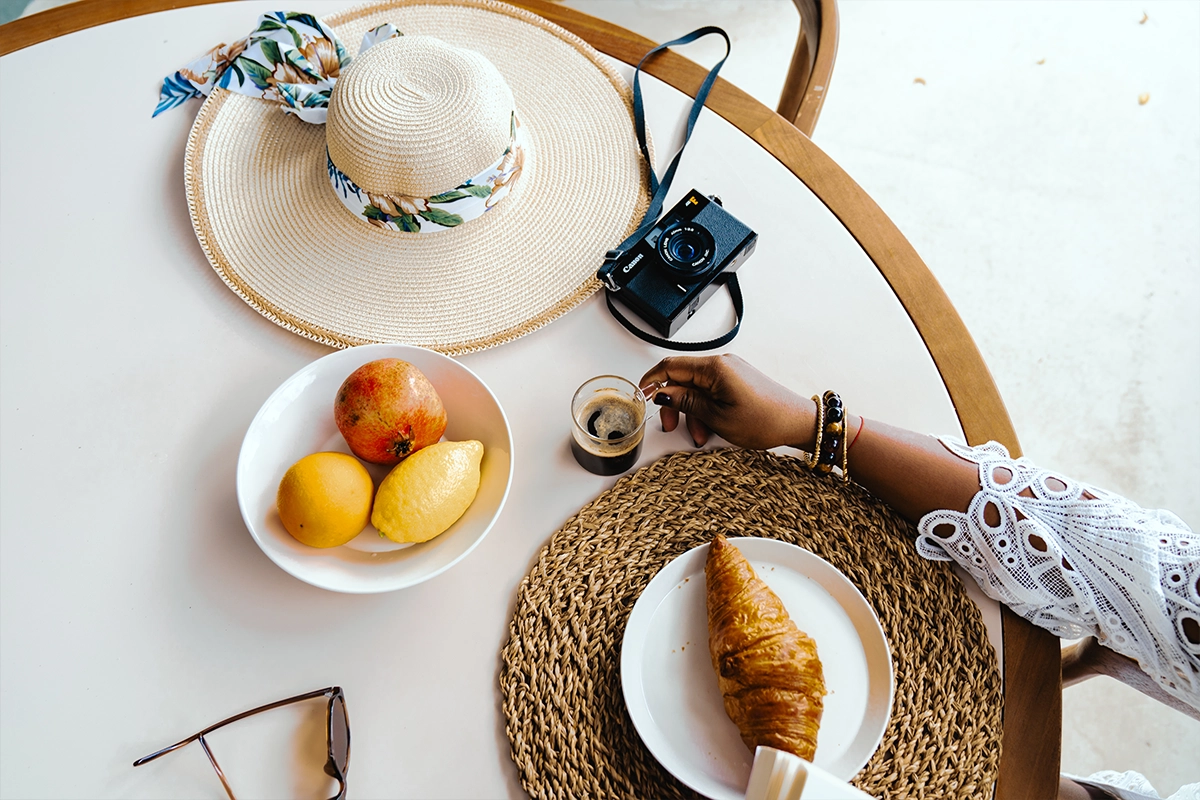

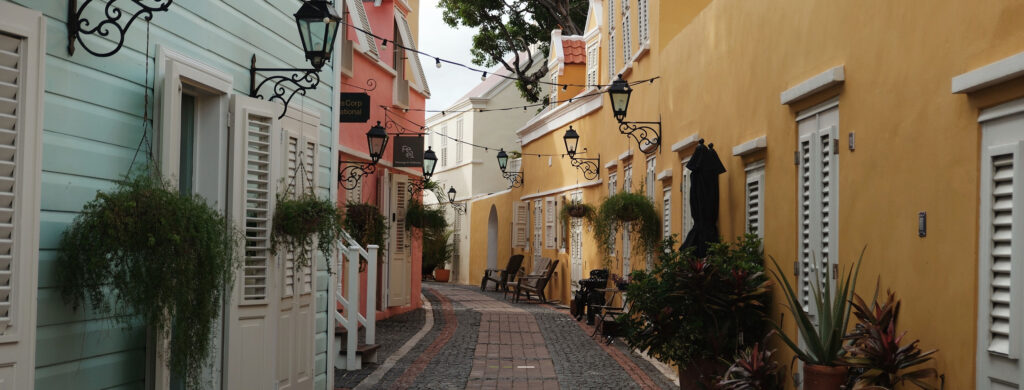
Curaçao is photographed constantly, yet its strongest images rarely come from repeating the same pose. Architecture changes with the hour, murals belong to working neighbourhoods and underwater subjects demand patience. These seven locations offer genuinely different visual conditions: historic façades, public art, open coast and a wreck below the surface. Bring a camera, but keep doorways clear, respect private property and remember that residents are part of a place rather than scenery arranged for visiting personal documentary travel cameras.
1. Scuba Lodge and the façades of Pietermaai
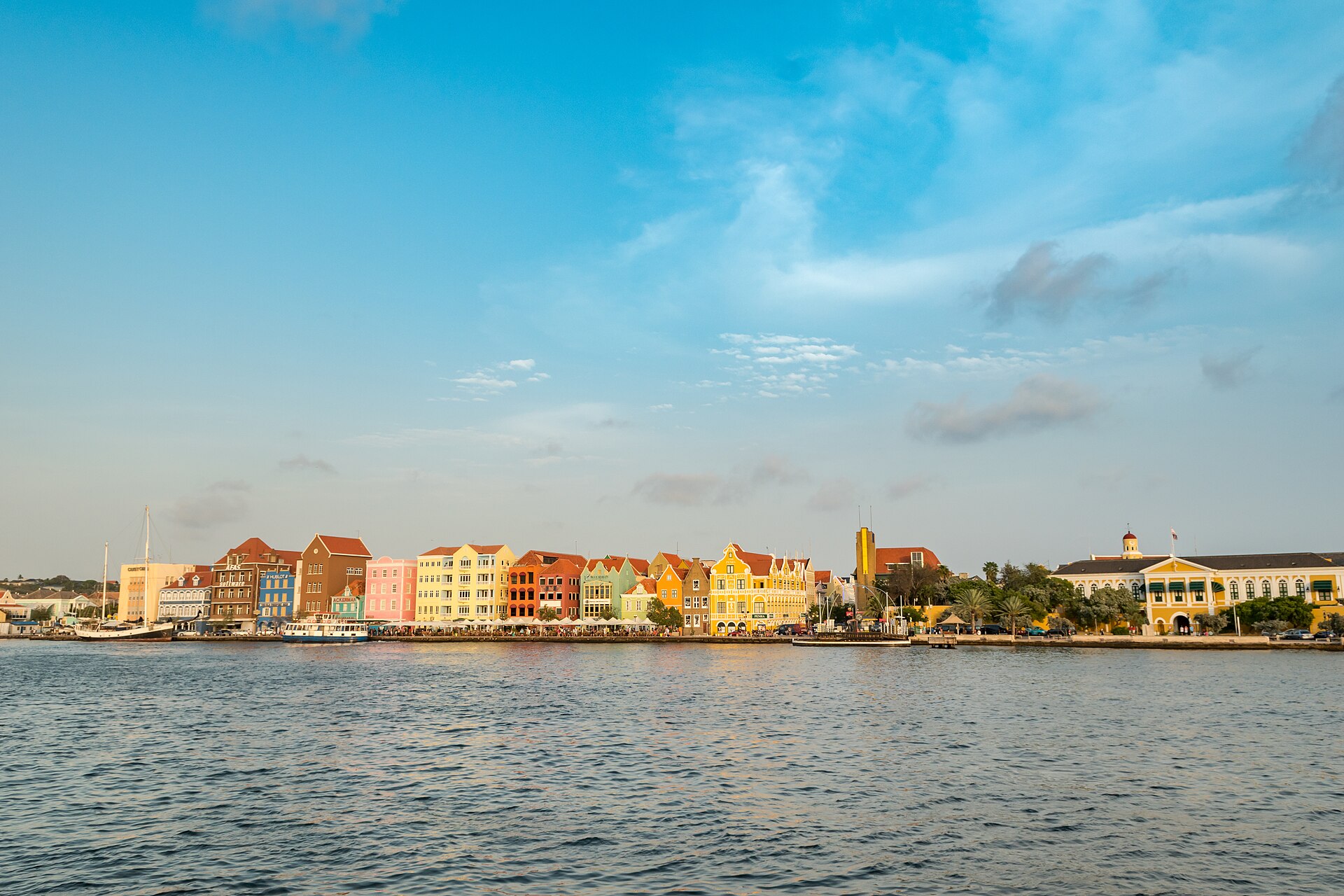
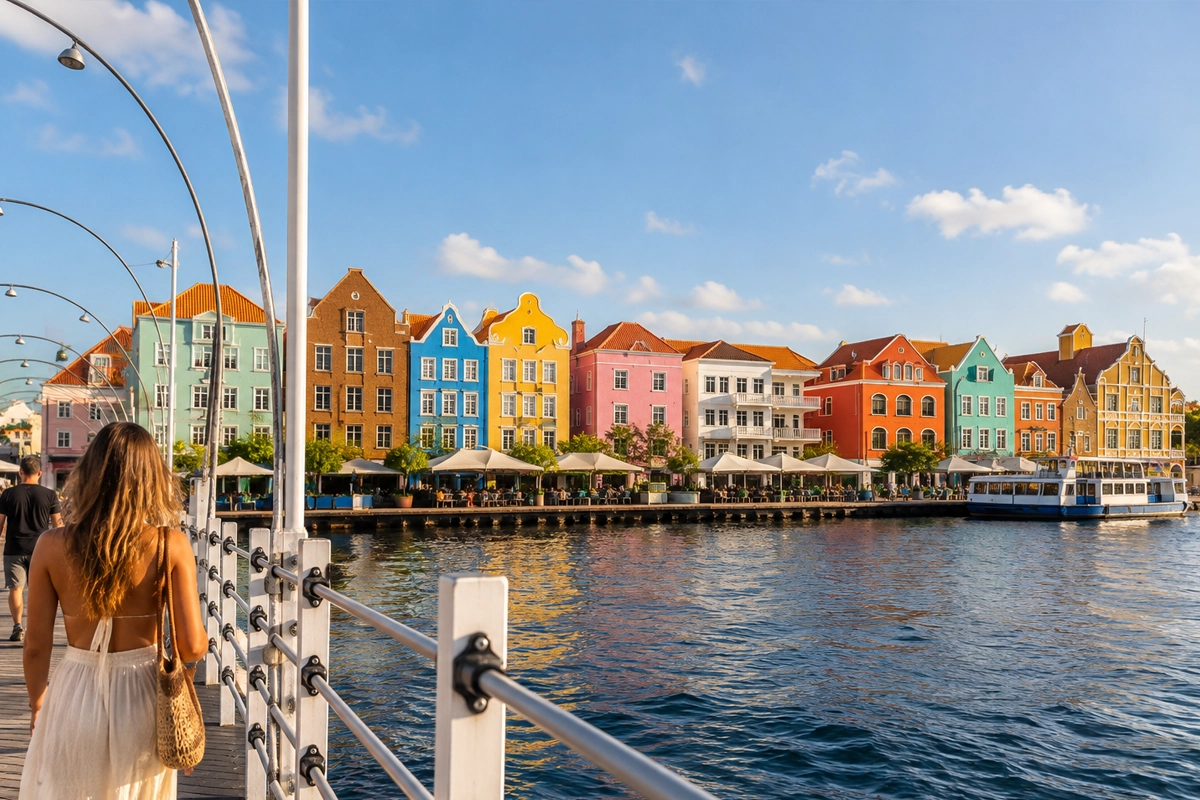
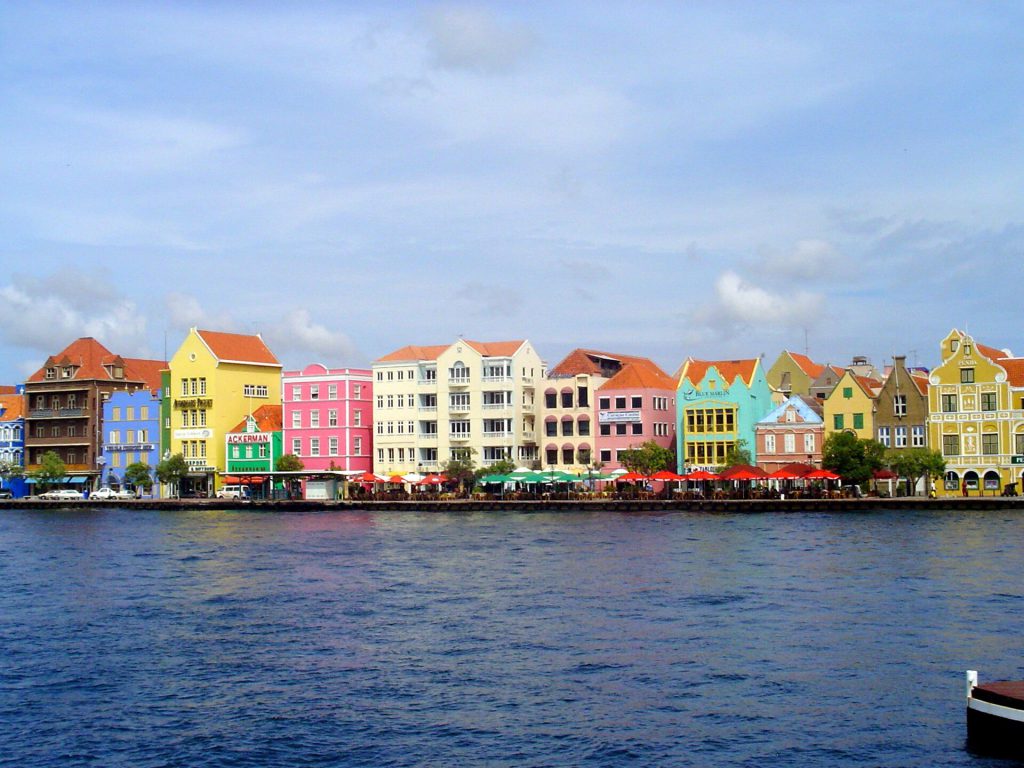
Scuba Lodge sits among the colourful historic buildings of Pietermaai, where restored façades, shutters and the sea-facing edge create strong architectural frames. Walk the district rather than photographing only one building. Earlier and later light can make colour easier to hold than harsh midday sun, but conditions vary. Cafés and streets nearby allow the camera to come down between images. Avoid blocking entrances or photographing people at close range without permission; the neighbourhood remains residential and commercial, not a constructed photo set.
2. The Kokomo Beach swing at golden hour
The swing at Kokomo Beach places a simple human-scale object against water and sky. Late-day light often adds warmth and softer contrast, although sunset conditions are never guaranteed. Kokomo currently states that it has no entrance fee, but food, seating and other services have their own conditions. Photograph the swing without monopolising it and step aside when others are waiting. The wider bay can produce quieter images than the familiar centred swing shot, especially when boats, shoreline and changing reflections become part of the composition.
3. 3 O’Clock Romance in Scharloo
The mural commonly known as 3 O’Clock Romance is associated with Scharloo, a district where large-scale street art meets monumental architecture. Because murals and surrounding access can change, confirm the current location before setting out and treat the artwork as part of a wider Scharloo walk. Stand far enough back to show its relationship to the building rather than cropping it into a generic background. For more city art and neighbourhood context, read Otrobanda on foot as a separate walk.
4. The mosaic stairway in Otrobanda
Otrobanda’s mosaic-covered steps are best photographed through detail as well as scale. Individual fragments, colour transitions and the way the stairway rises between buildings can produce a more thoughtful series than one wide photograph. Public-art names and map labels are not always consistent, so navigate with current local information rather than relying on a single unofficial title. Explore respectfully, keep passageways open and continue through Otrobanda to see how street art sits beside older architecture and everyday street life.
5. Klein Curaçao Lighthouse
The lighthouse on Klein Curaçao brings vertical structure to an otherwise low, exposed island. Wide compositions can show the building against dry land and open sky, while closer details reveal weathering and texture. Reaching the island requires a boat excursion, and the lighthouse should be approached according to current safety and access guidance from your operator. There is little natural shade, so protect both yourself and equipment. The journey deserves a full day and fits naturally within the broader Curaçao bucket list.
6. Tugboat Beach below the waterline
At Tugboat Beach, the most distinctive photographs are underwater. The wreck lies close enough to shore to be reached by snorkellers with suitable ability, and fish and coral use its structure. Visibility, current and light change, so no image is guaranteed. Use appropriate underwater equipment, avoid touching the wreck or marine life and give other swimmers space. Our Tugboat Beach experience guide covers the visit in more practical detail than a photography list can, including the time and conditions worth considering before entering the water.
7. The Curaçao mural at Pasawá
The mural associated with Pasawá is included because its graphic Curaçao identity offers a different image from coastal views and colonial façades. Exact artwork, access and surrounding development can change, so verify the current location before publishing a route or making a special journey. Photograph public art in context and do not cross private boundaries for a cleaner angle. If the mural cannot be confirmed locally during your stay, use the time for the better-documented street-art areas of Otrobanda or Scharloo instead of forcing the shot.
Photograph less, notice more
The best camera days leave time between frames. Choose two or three locations that fit one geographical route, then allow the light and street to decide the rest. From Nubia Suites, Otrobanda and historic Willemstad can become recurring subjects rather than one hurried session. Return early, step out again near sunset and let familiarity improve the photographs over several days. Repeated observation usually produces a more personal record than moving through all seven locations simply to reproduce images already seen online.